Three Streams, One Village: Former Misawa Village and Its Bid to Become a Best Tourism Village
- 投稿日:
- 2026年11月5日
- (更新日:2026年11月7日)
What is Misawa Village?
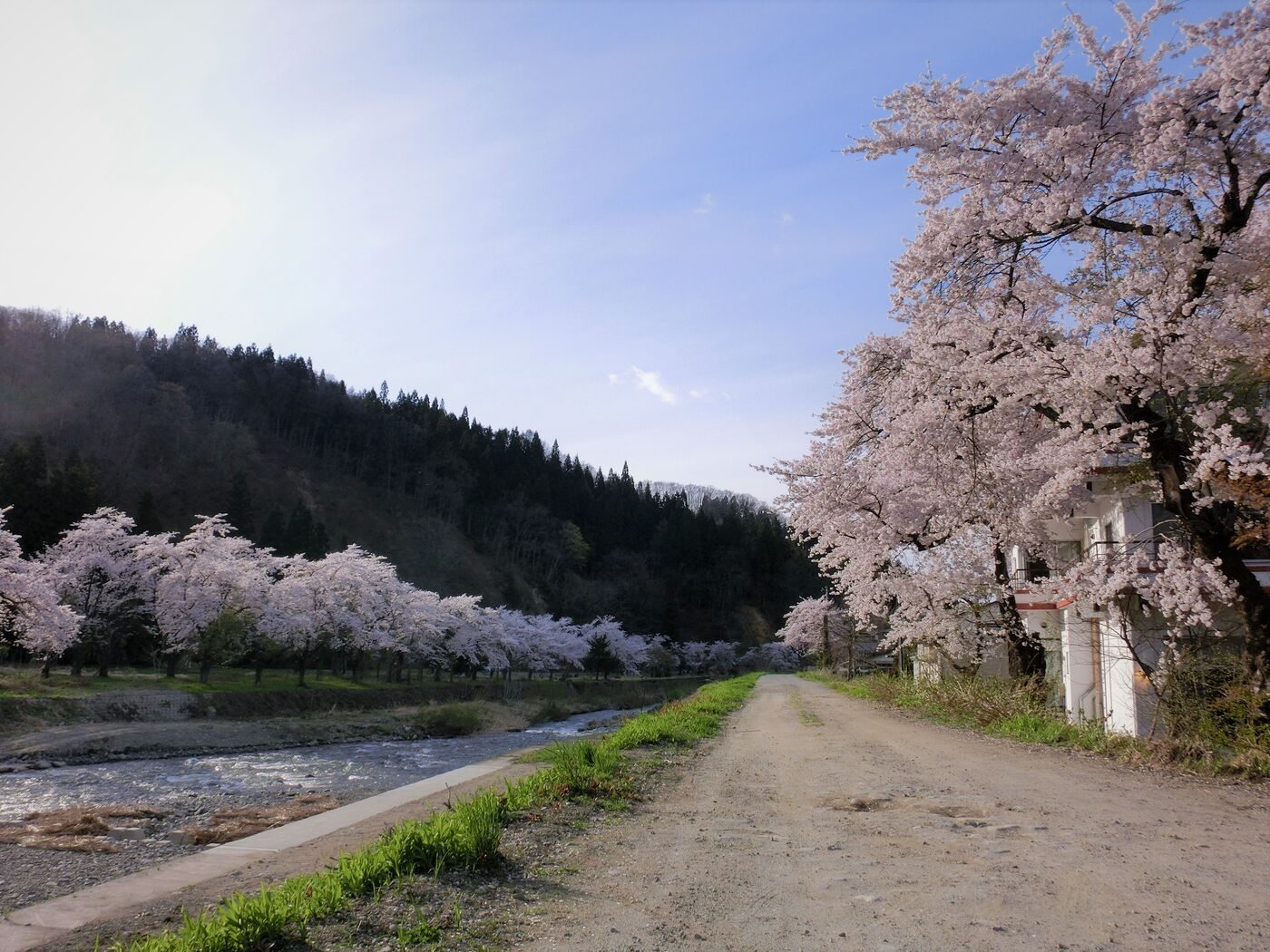
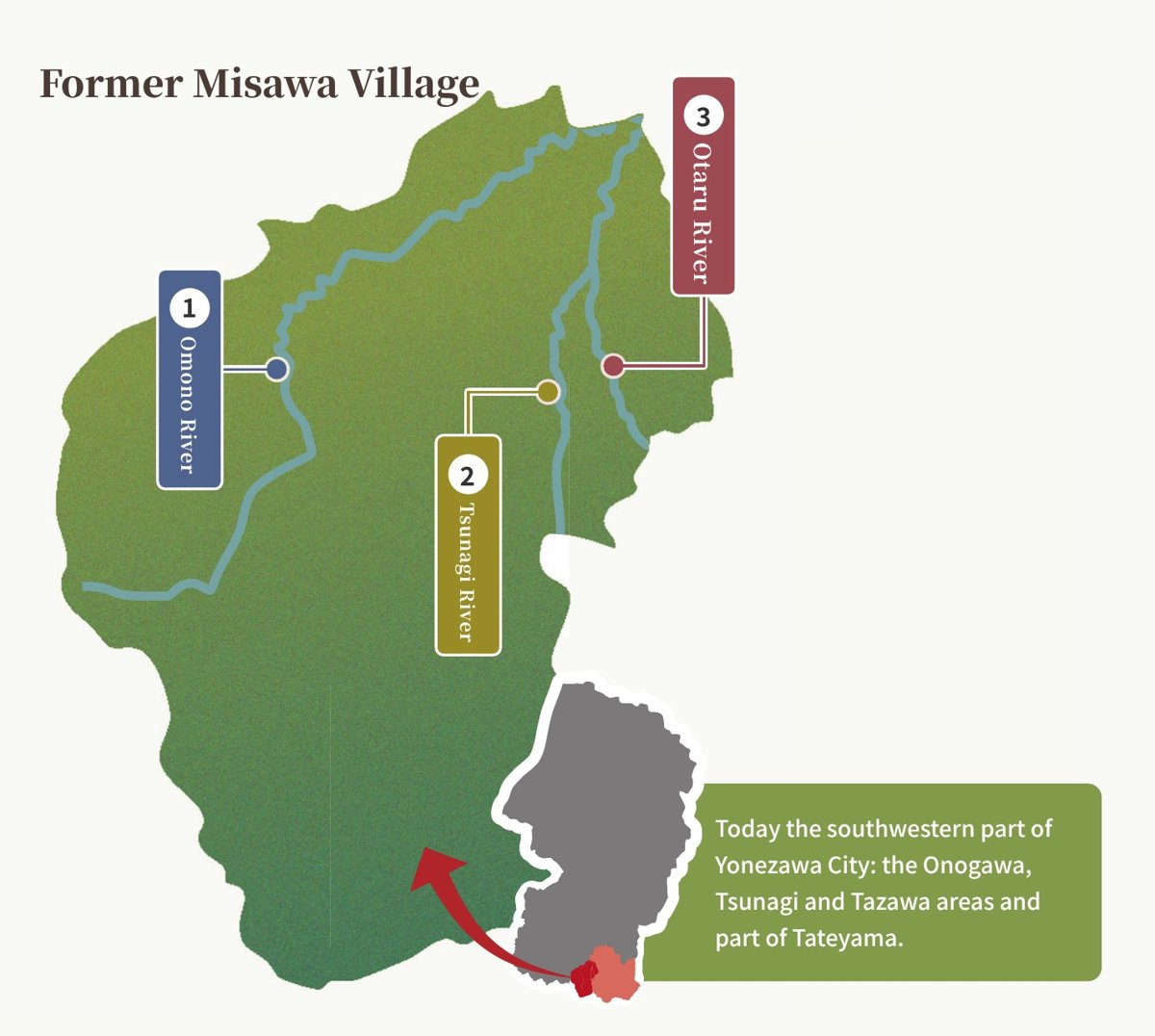
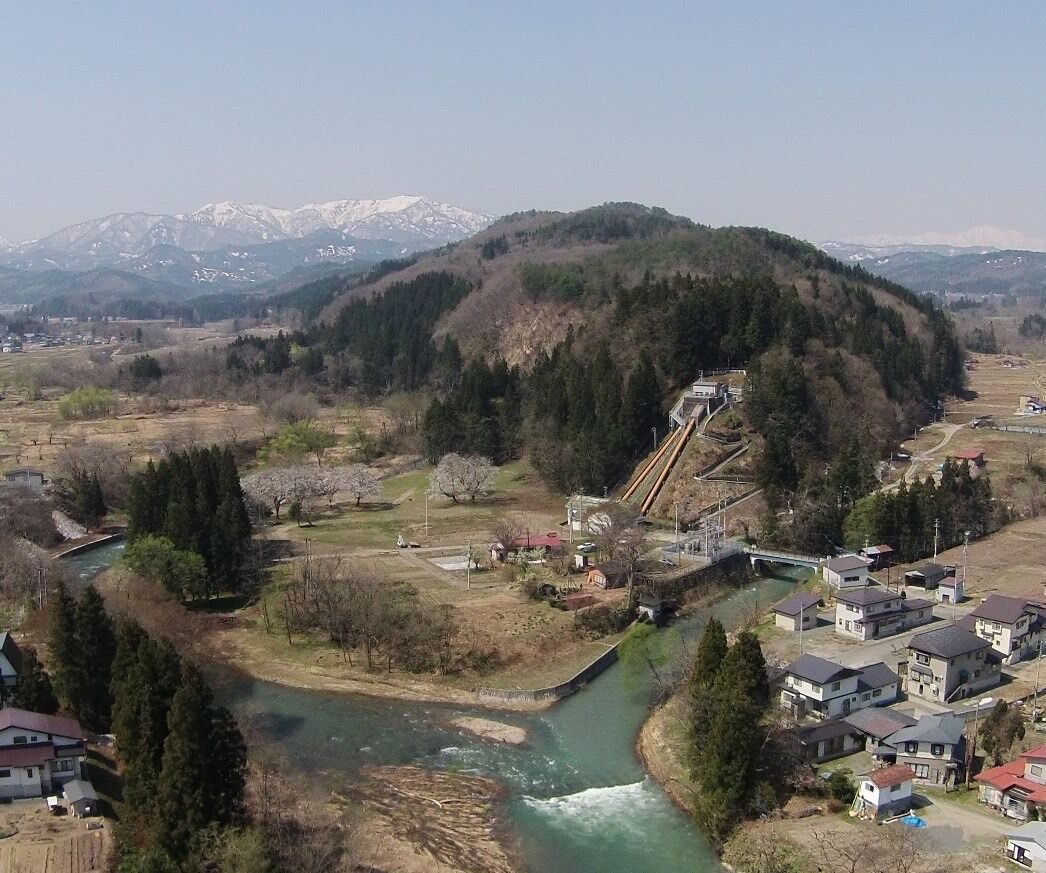
Misawa was a village in the southwest of Yonezawa City, Yamagata. It was formed in 1889, when several small villages joined together. In 1954, it merged with Yonezawa City. The village is gone, but all of its place names are still in use today: Onogawa, Yanazawa, Akashiba, Kuchitazawa, Iritazawa, Fukiyashiki, Kanbara, Tateyama, and Narushima.
The name Misawa means “three streams.” A sawa is a small river that runs through a mountain valley. The three streams are ① the Omono River, ② the Tsunagi River, and ③ the Otaru River. Hot spring inns and small hamlets are scattered through the valleys where they meet.
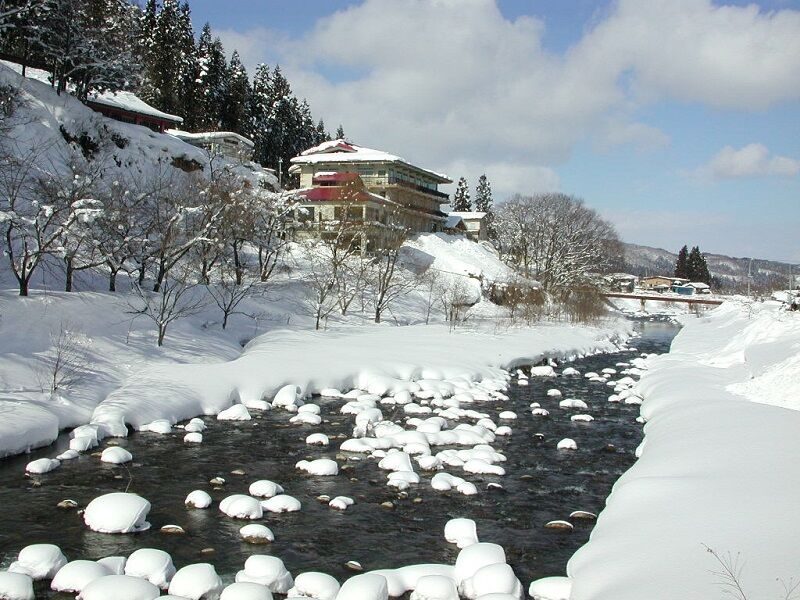
The village lies at the western foot of the Azuma mountain range. Its highest peak, Mount Nishi-Azuma, rises 2,035 m. Winters bring very heavy snow, and the area is officially designated a “special heavy snowfall area.” Life in deep snow taught people to help one another.
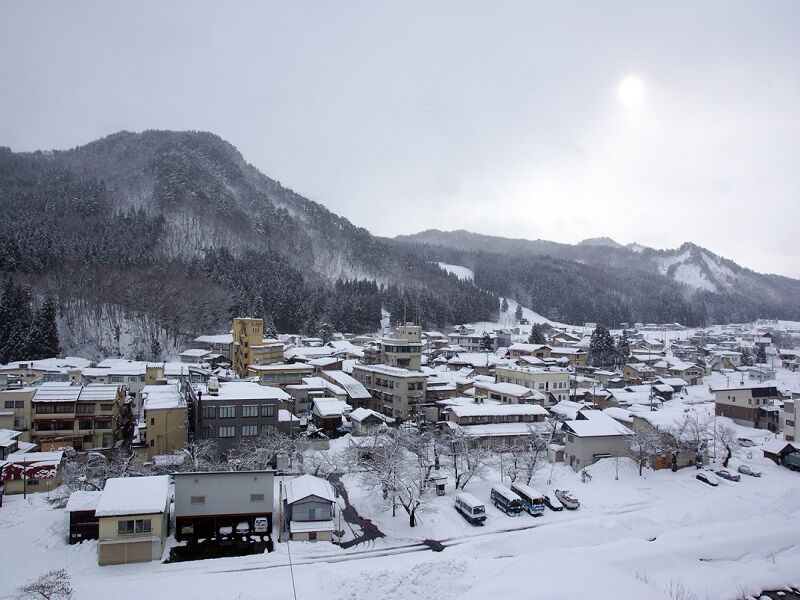
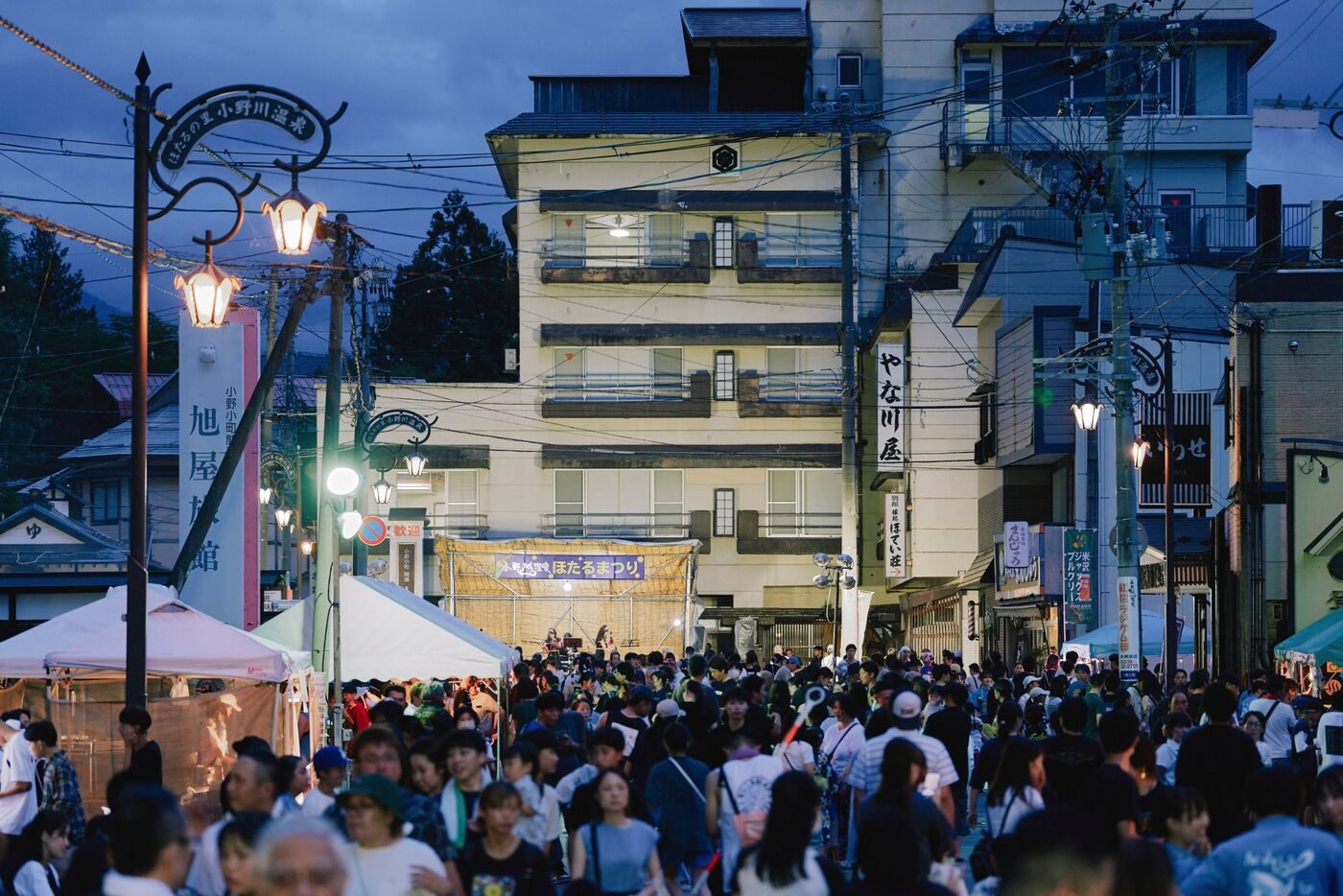
Onogawa Onsen is the gateway to former Misawa Village. Tofuya Ryokan stands here, inside the village.
A short history of Misawa
| Period / Year | What happened |
|---|---|
| 834 | Legend says Ono no Komachi, a celebrated poet, discovered Onogawa Onsen. |
| Warring States period (1467–1615) | A record says the samurai lord Date Masamune healed a broken bone at Onogawa Onsen. |
| Edo period (1603–1868) | Under the Yonezawa domain, people floated logs down the rivers to the castle town. This was called kinagashi. Stone monuments called sōmokutō were built to thank the trees. Uesugi Yōzan, the famous lord of Yonezawa, set up salt works that made salt from the hot spring water of Onogawa. |
| 1889 | Under a new national system of towns and villages, eight villages and part of Narushima Village joined to form Misawa Village. |
| 1898 | The Takinosawa hydroelectric power plant became the first in Yamagata Prefecture to generate electricity. Electric lights came on in the town of Yonezawa. The whole village helped carry the generator up the mountain. |
| 1919 | The Tateyama hydroelectric power plant was completed. It was built on the grounds of a castle once held by Date Masamune. It is still working today. |
| 1922 | The Yanazawa and Onogawa schools joined into one. It later became Misawa Tōbu (East) Elementary School. |
| 1954 | Misawa merged with Yonezawa City, and the village name disappeared. |
| 1966 | The Onogawa Hot Spring Source Cooperative was founded. The community began to manage its hot spring water together. |
| 1967 | The Takinosawa (Onogawa) power plant was retired. Its generator and turbine were moved to the Meiji Mura museum in Aichi Prefecture, where they are still on display. |
| 1969 | The Yonezawa Firefly Protection Society was founded. Local people began protecting the waterside where fireflies live. |
| 1989 | Onogawa was chosen by Japan’s Ministry of the Environment as one of the “100 Hometown Villages of Living Things.” |
| 2015 | Onogawa was chosen by the Ministry of the Environment as an “important satoyama area for biodiversity conservation.” |
| 2020 | The Japanese Forest Society recognized “Yonezawa’s heritage of living with the mountains: the sōmokutō monuments and kinagashi” as Forestry Heritage. |
| 2023 | Misawa Tōbu and Misawa Seibu Elementary Schools closed and merged into Yonezawa City Seibu Elementary School. |
| 2025 | The former Misawa Tōbu Elementary School reopened as “Yonezawa Misawa Elementary School | Tokokoto,” a place to stay and try hands-on activities. |
What makes Misawa special
Each of the three streams grew its own culture. And each of these cultures is still being passed down today, without a break.
① Omono River: Sōmokutō and kinagashi
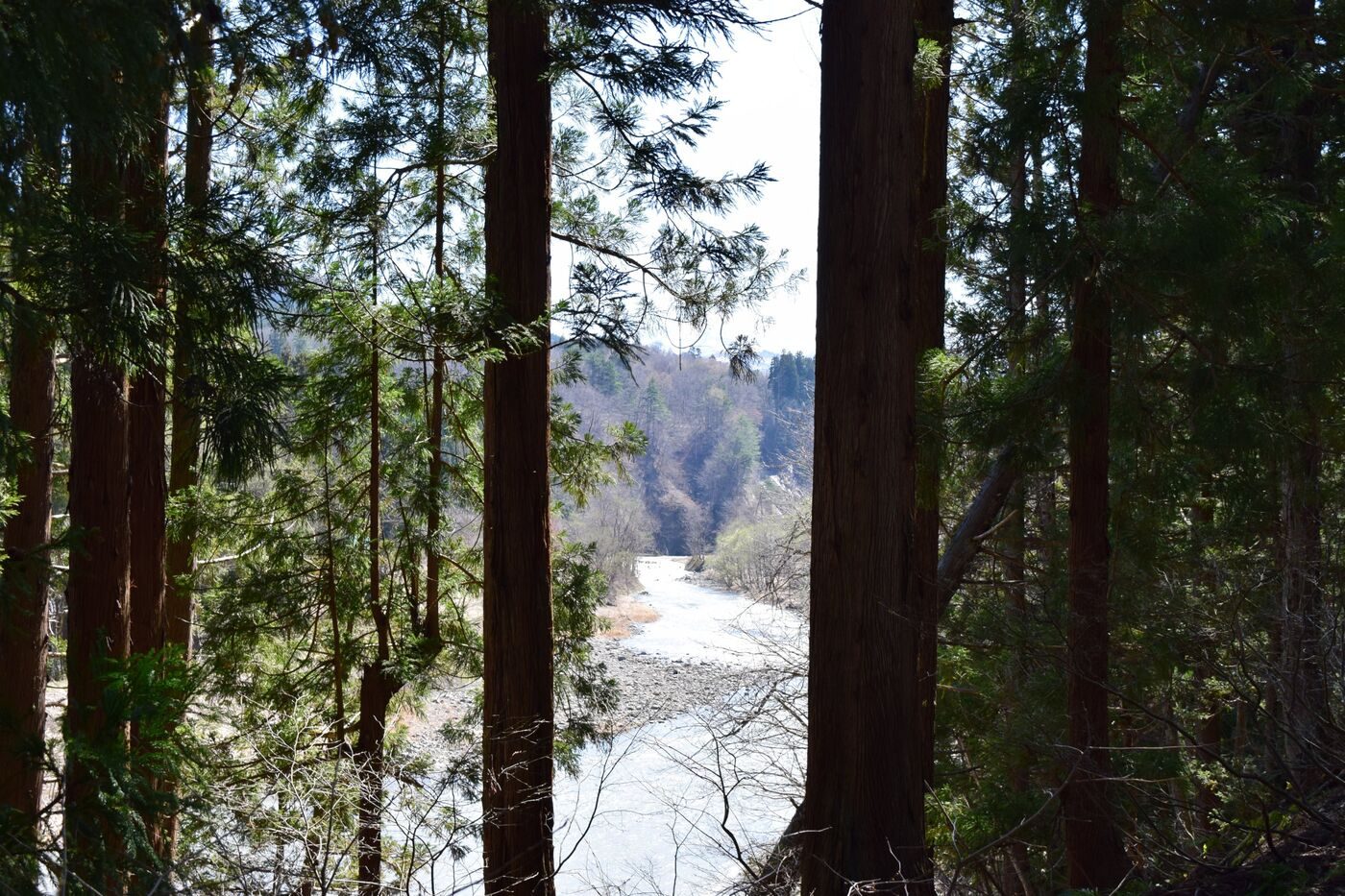
In the Edo period, wood from this valley was an important fuel for the castle town of Yonezawa. People cut trees and floated the logs down the river to town. This was called kinagashi, “log floating.”
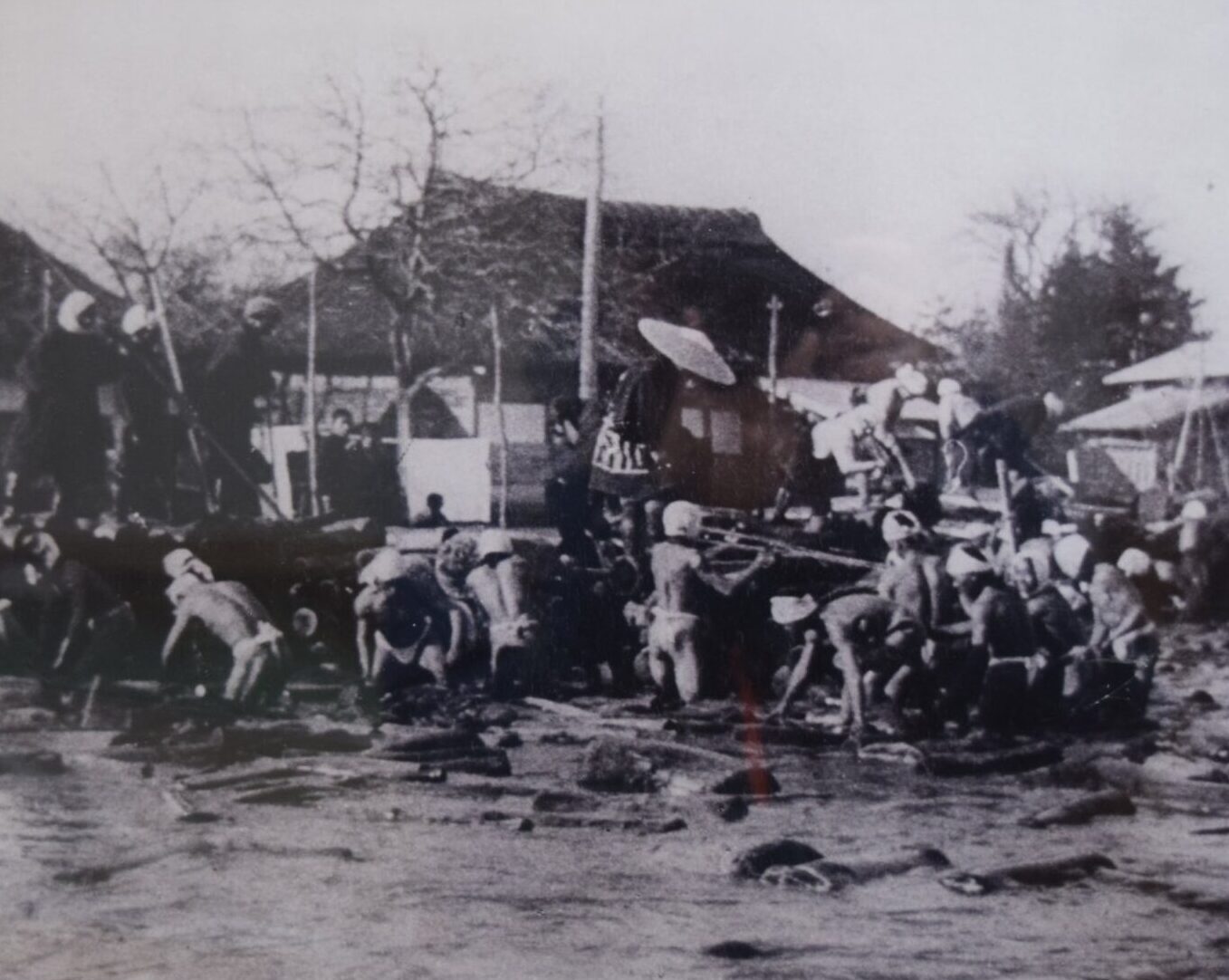
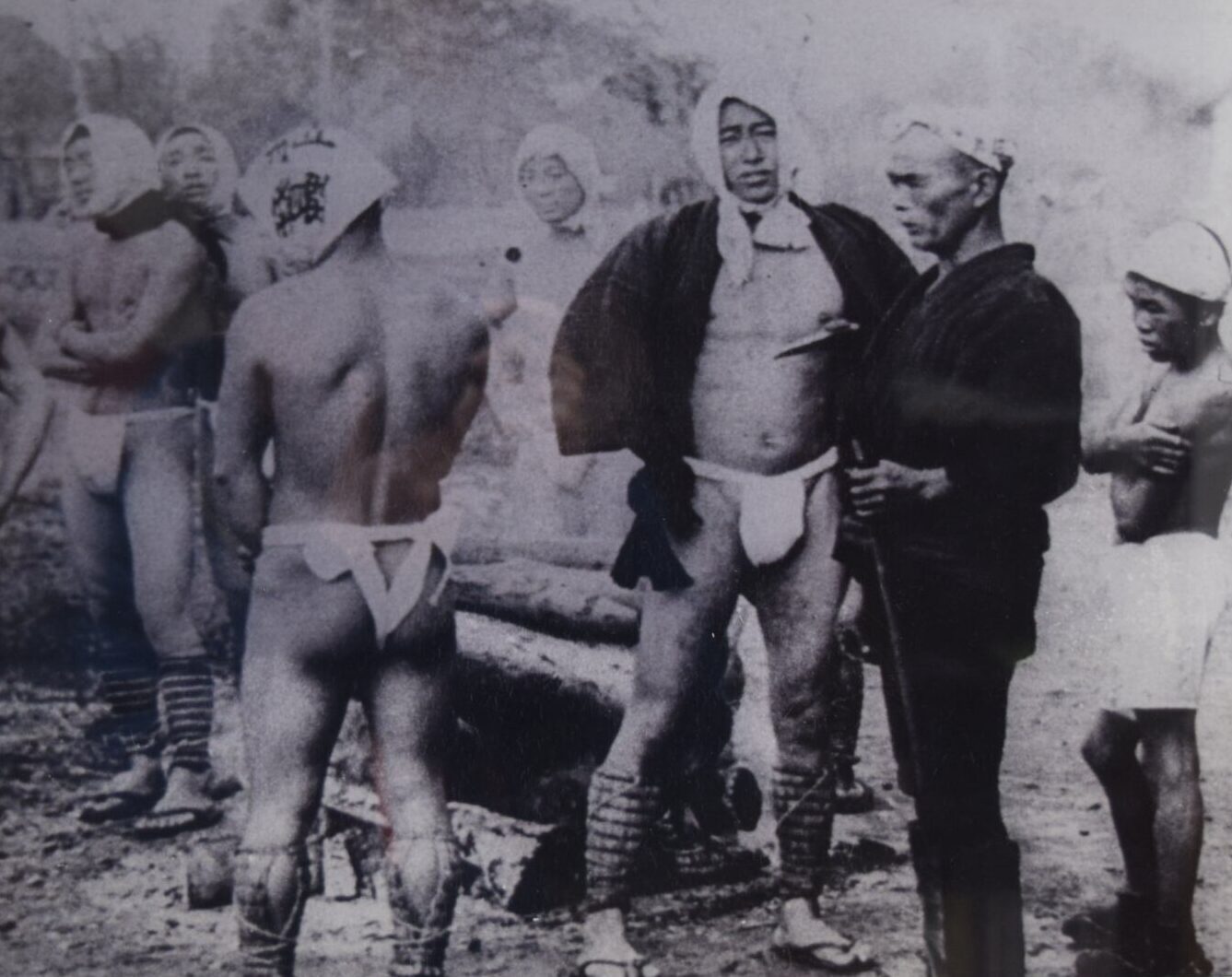
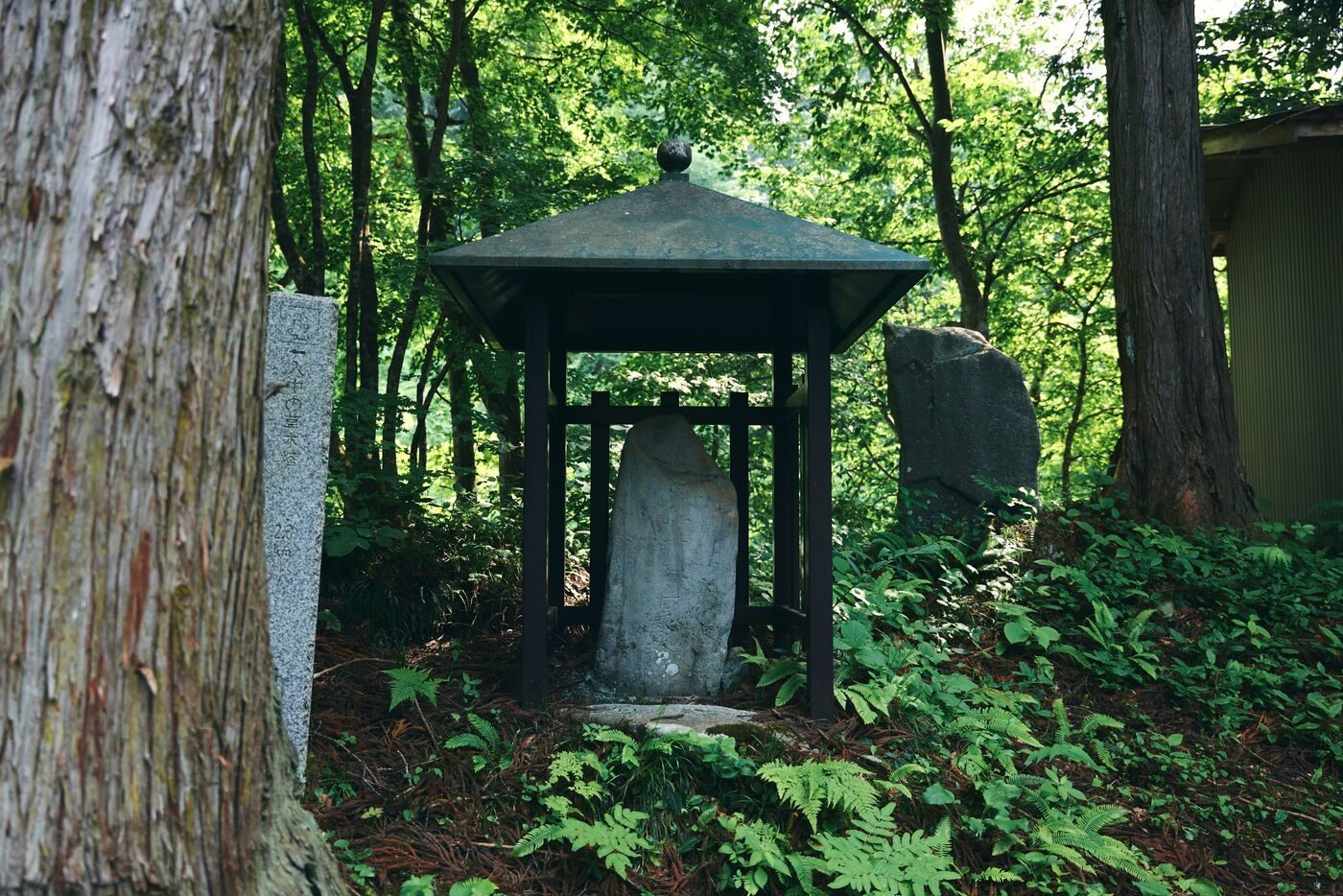
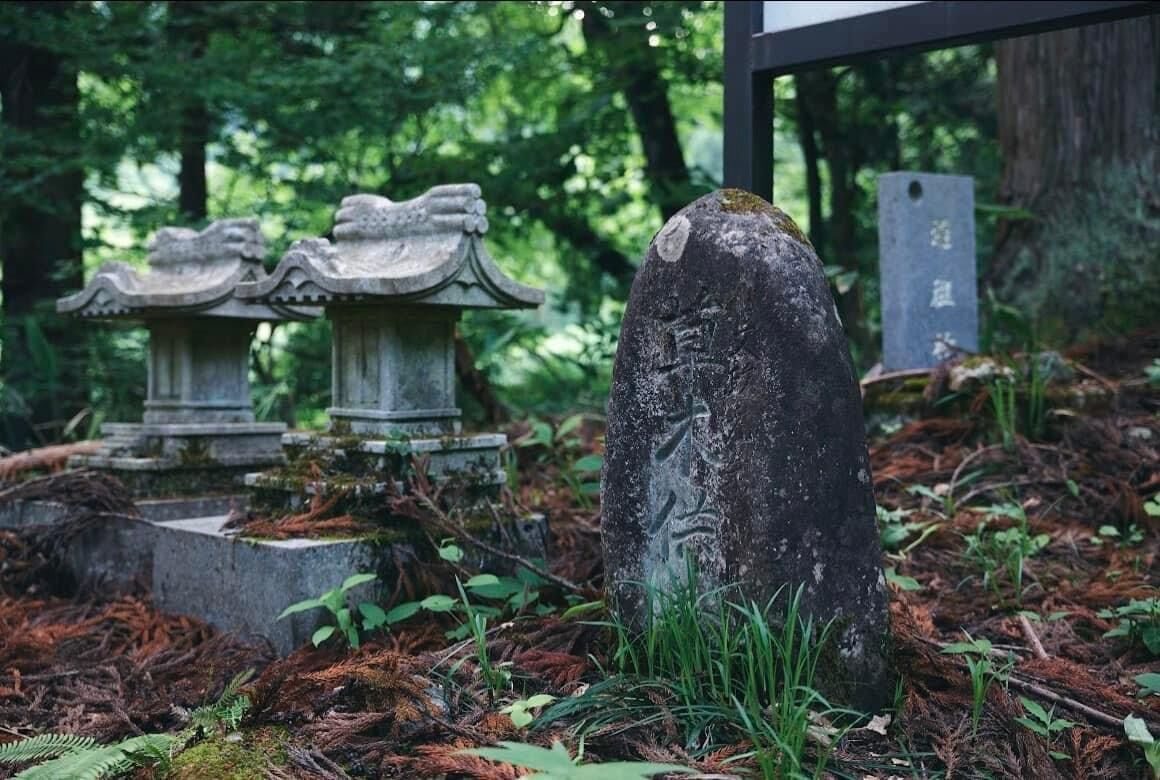
To pray for safe log floating, and to thank the trees for their lives, people built stone monuments called sōmokutō, “towers for grass and trees.” There are about 170 sōmokutō in all of Japan. Only 34 date from the Edo period, and 32 of those are in the Okitama region, where Yonezawa lies. Yonezawa City has 17 of them, all designated as city cultural properties.
② Tsunagi River: A lion dance performed every Obon
Tsunagi is a small hamlet deep in the mountains. Only a few people live there today.
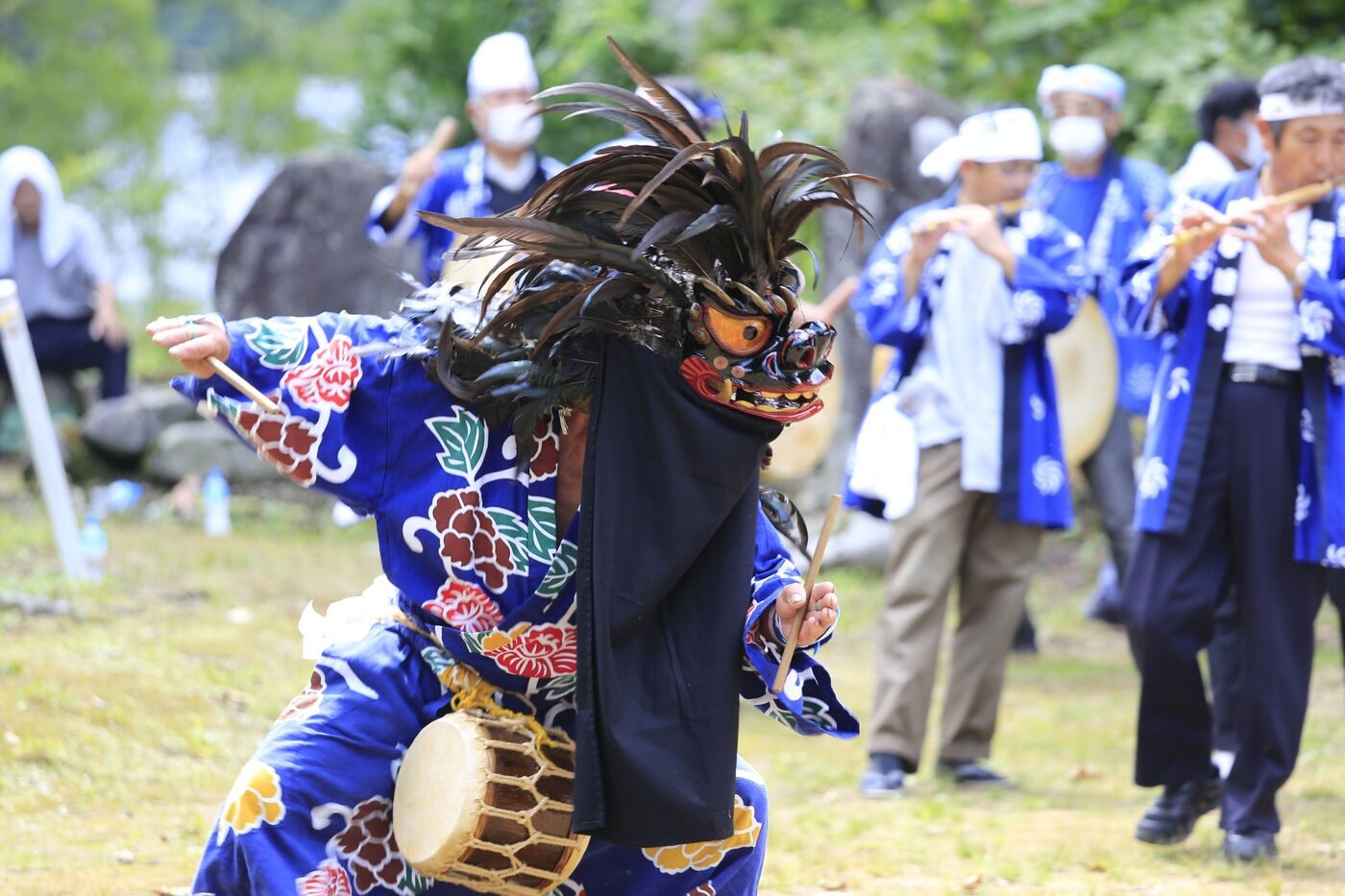
The hamlet keeps a folk dance called the Tsunagi Shishi Odori, a dance of three lions. Every year at Obon, the summer festival for honoring ancestors, the lions visit the temple grounds and homes and dance as an offering. Even as fewer people live here, the Obon dance has never once stopped. It is a sacred dance that is never performed outside the hamlet.
③ Otaru River: Hot springs and daily life
The hot spring water comes out of the ground at about 80°C. For centuries it has been used not only for bathing, but in many parts of daily life.
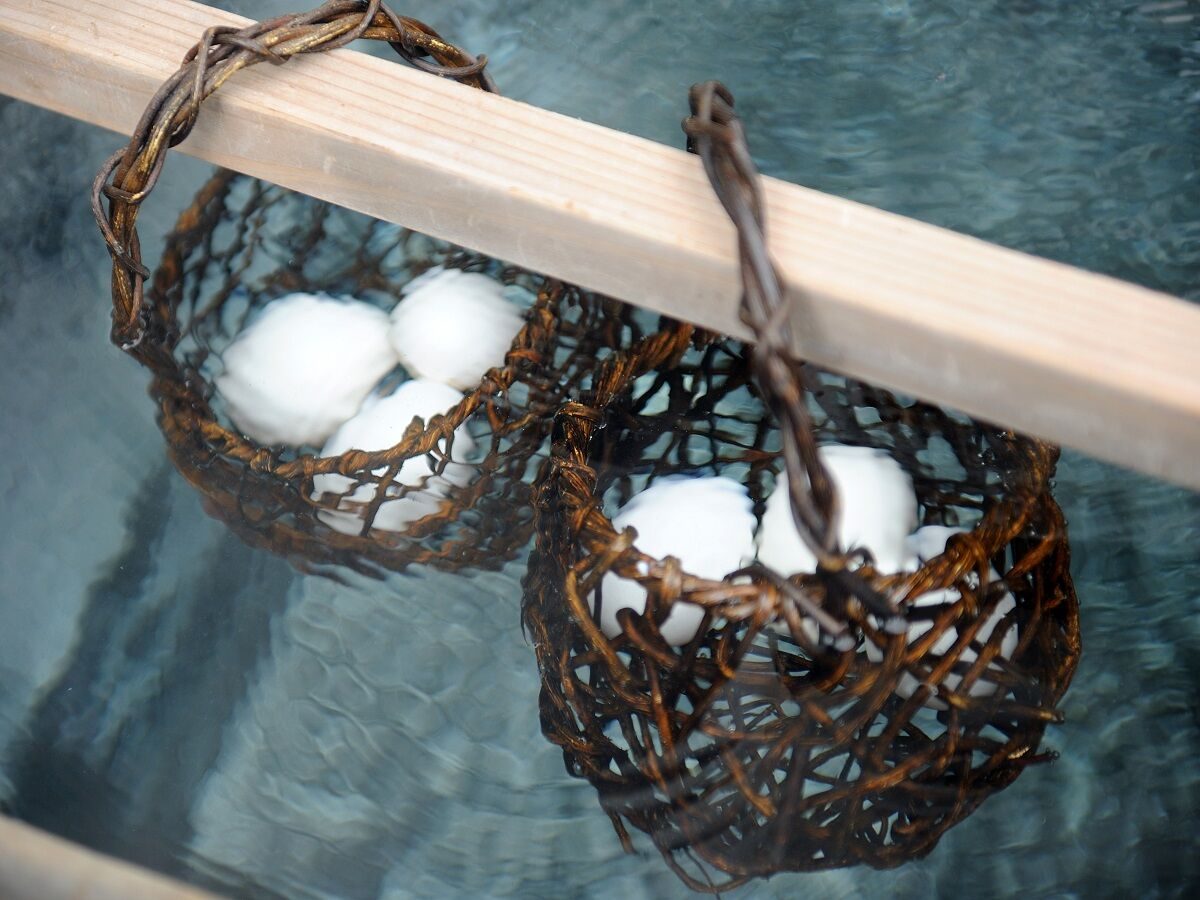
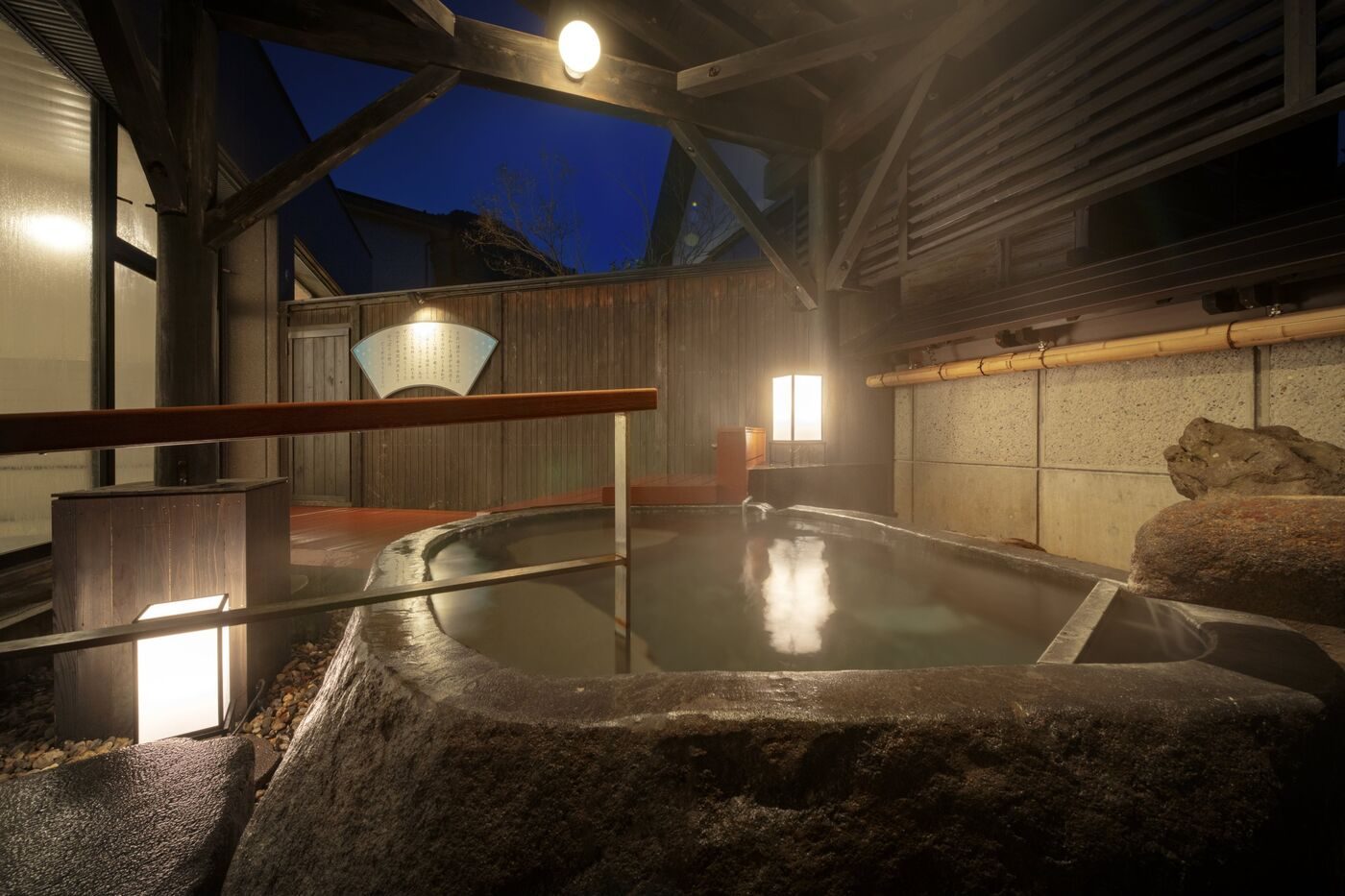
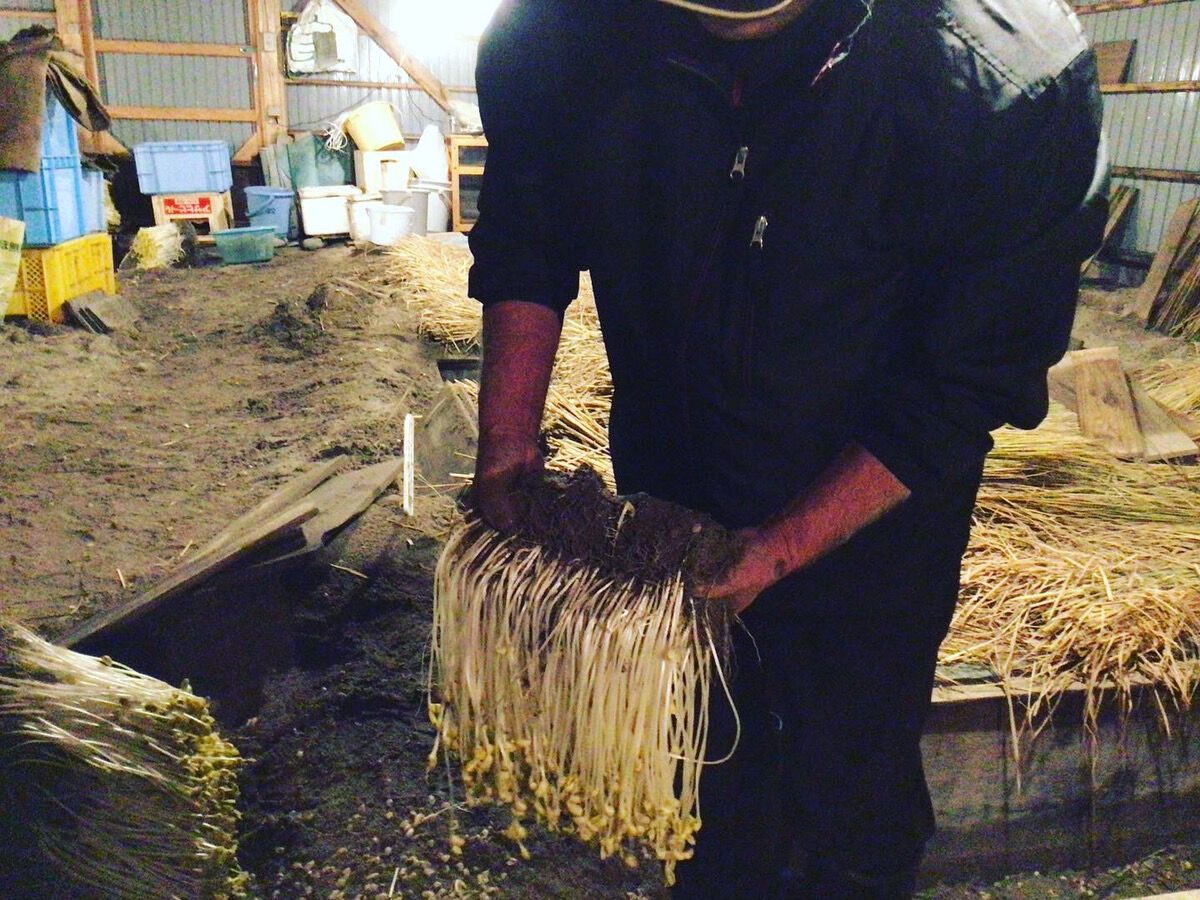
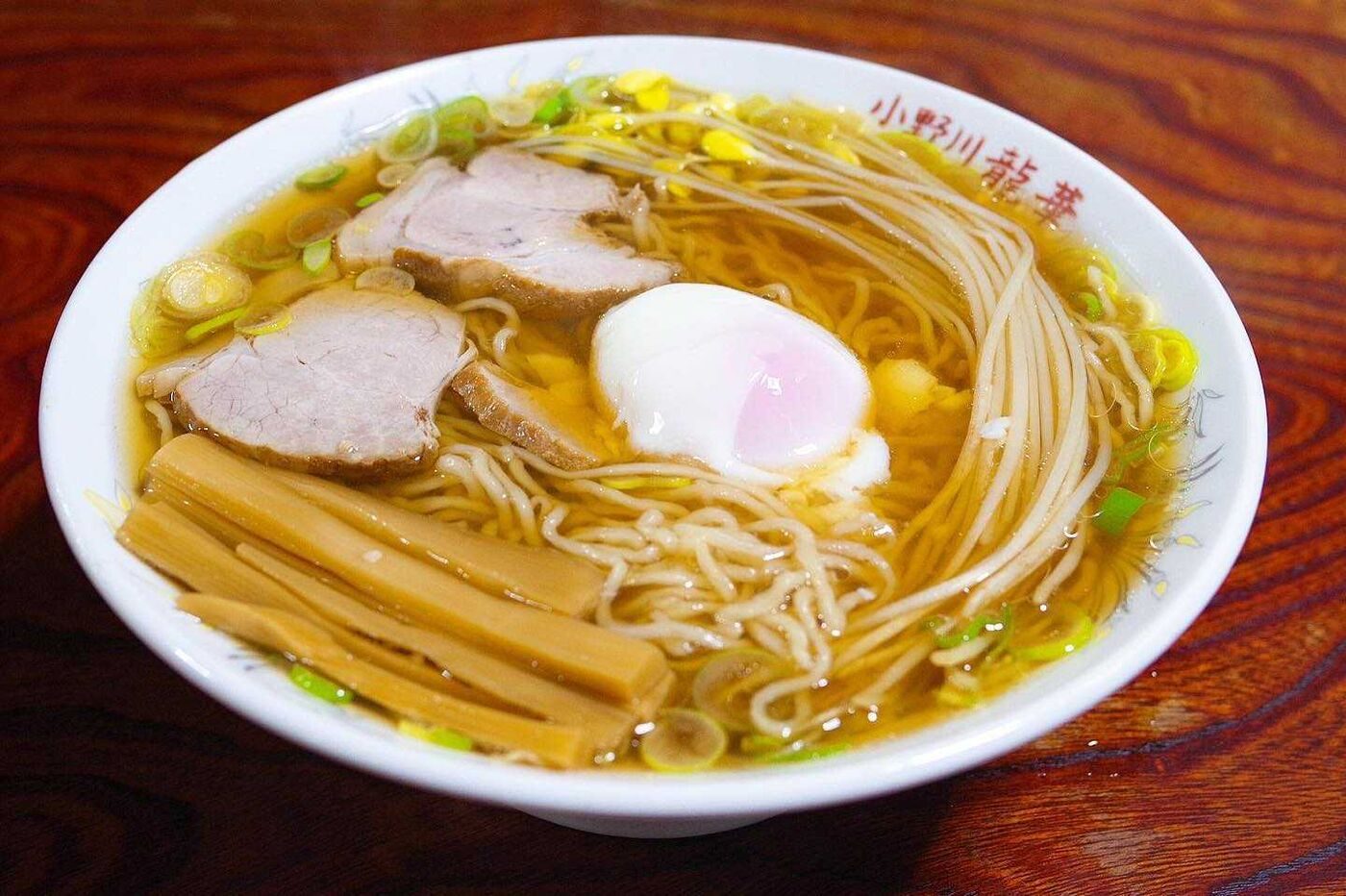
At the public baths Amayu and Takiyu, locals and travelers bathe side by side. The heat of the hot spring grows Onogawa mame-moyashi, a local bean sprout, and melts the snow on the roads.
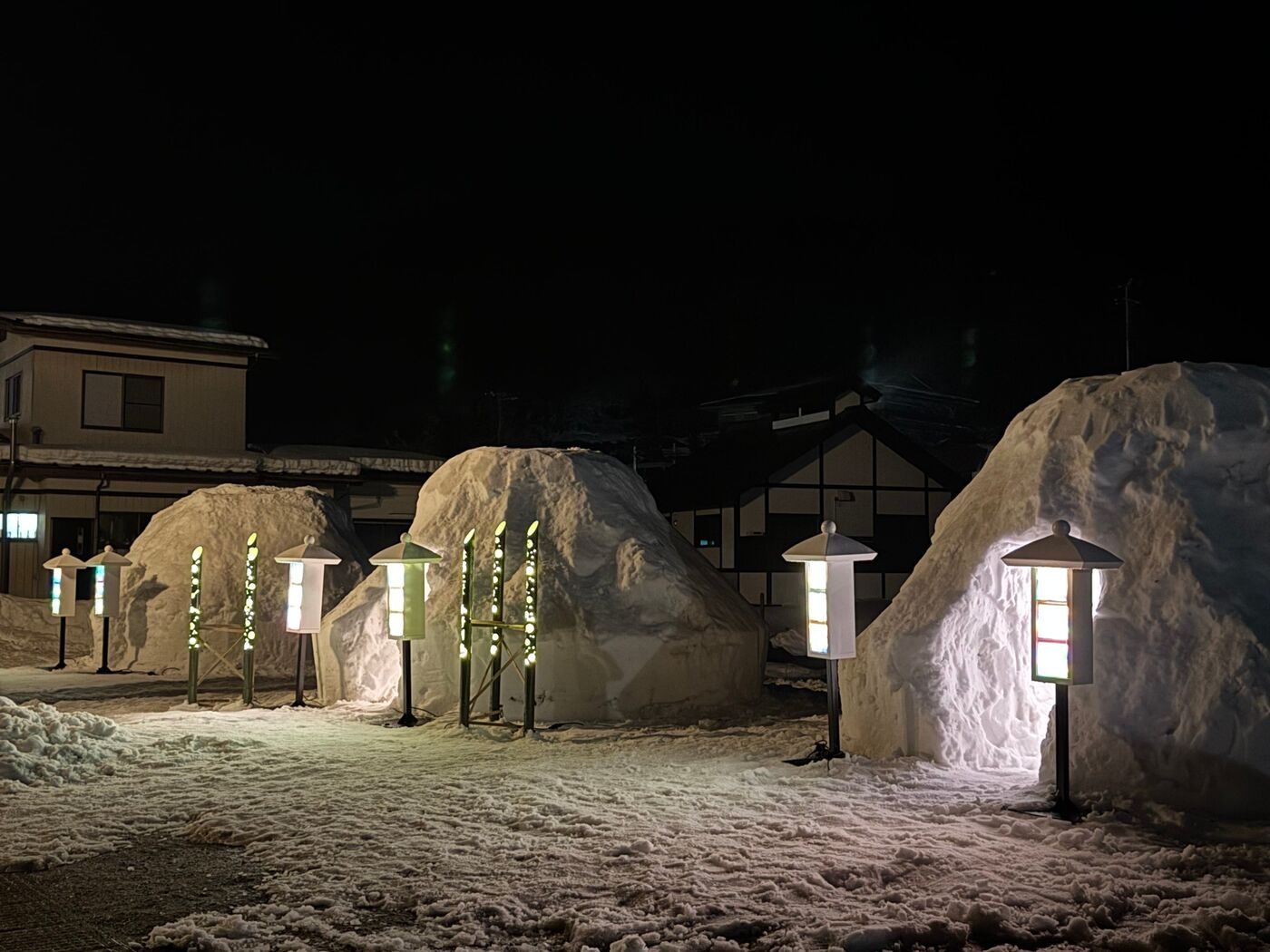
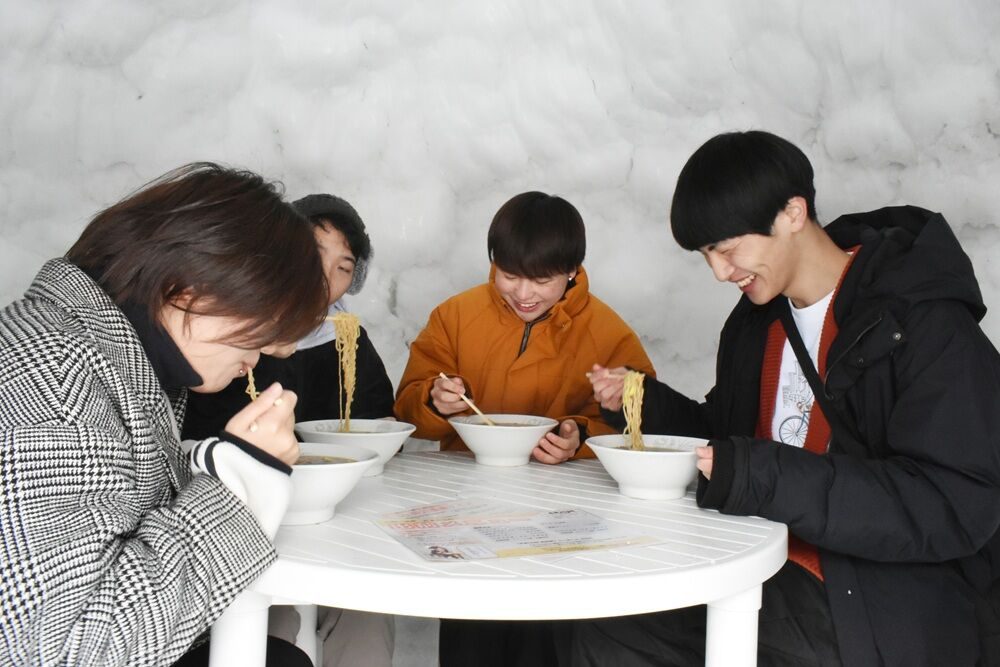
At Tofuya Ryokan, we use the heat from our used bath water for heating and hot water. This brought the 30 tons of oil we used each year down to zero. The project won an Excellence Award from the Minister of the Environment at Japan’s Good Life Award.
Near the hot spring town is Kinoene Daikokuten Honzan, a temple known for its god of good business. Anyone can enter the main hall. Visitors can also try copying sutras by hand and making their own Buddhist prayer bracelet.
A village of fireflies
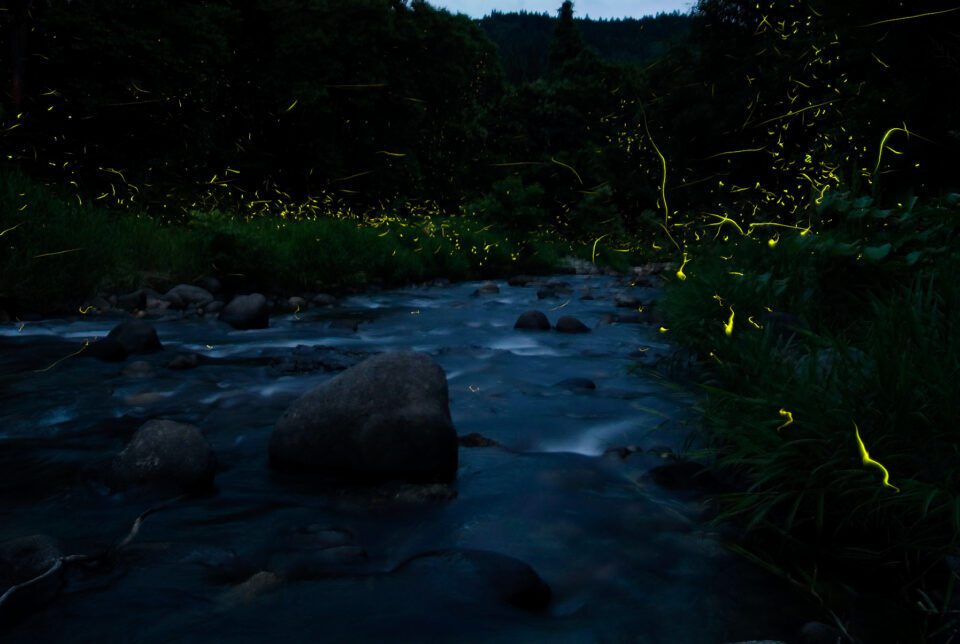
Three kinds of fireflies can be seen in Onogawa: the Genji firefly, the Heike firefly, and the Hime firefly. You can see them just a one-minute walk from the hot spring town. Local people have protected the waterside where fireflies live since 1969.
When people put their hands together before a sōmokutō, it is not religion. It is gratitude to nature, like saying itadakimasu before a meal. This same feeling runs through kinagashi, through the lion dance, and through the way people use the hot springs.
What is a Best Tourism Village?
Best Tourism Villages (BTV) is a program run by UN Tourism, the United Nations agency for tourism. It recognizes rural villages around the world.
Villages must be small, with farming, forestry, or other primary industries, and must protect their local ways of life and values. Beautiful scenery alone is not enough. Does the village protect its culture and nature? Does tourism support the local economy and daily life? Does it care for the environment? Villages are judged on nine areas like these.
In Japan, the Japan Tourism Agency holds a national review and decides which areas to recommend to the UN.
▶ UN Tourism: Best Tourism Villages (official site)
▶ Japan BTV brochure
Our road to recognition
Former Misawa Village applied for BTV, led by the Onogawa Onsen Tourism Council. It passed the national review and was chosen as one of Japan’s eight representative areas. We are now waiting for the international result.
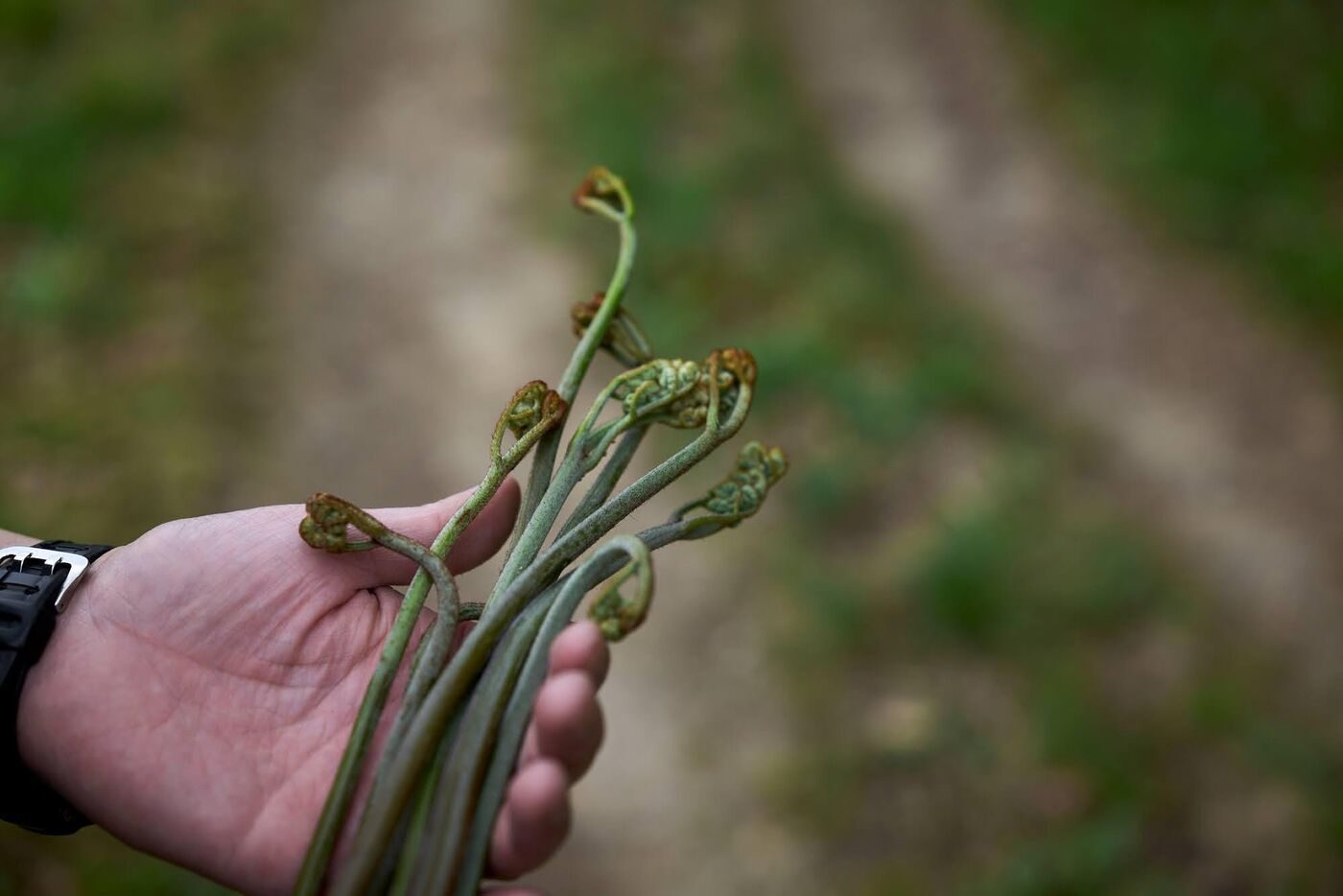
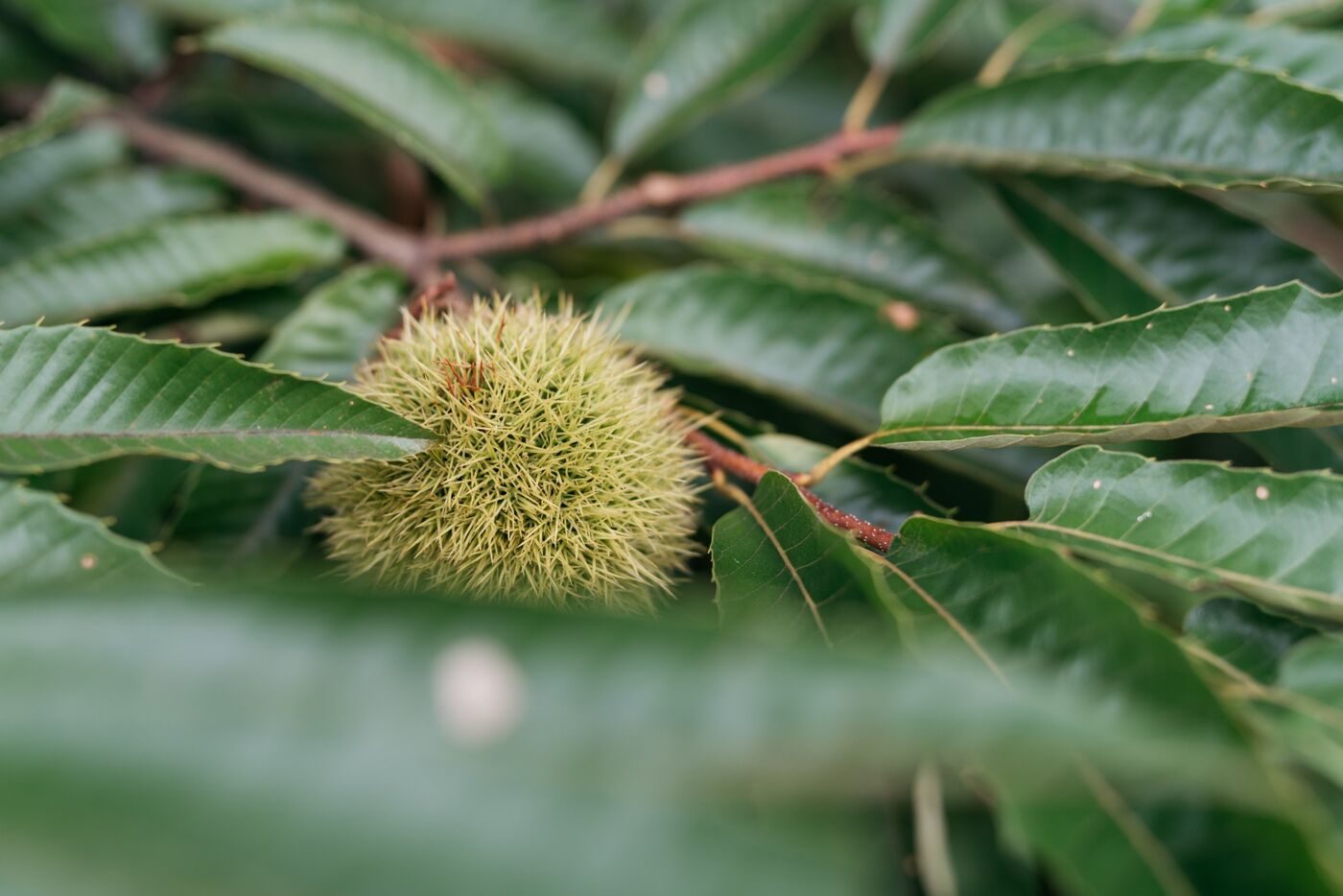
To prepare the application, we first listed the treasures of our area, one by one. We heard directly from local people: a researcher of sōmokutō, the lion dance preservation society, a temple priest, a master of wild mountain vegetables, and many others. Preparing the application became a chance to see our home with fresh eyes.
In October 2026, we held a symposium in Yonezawa called “Sharing Misawa’s Life and Culture with the World.” About 30 people came, including residents, tourism businesses, and local government staff. An official from the Japan Tourism Agency explained how BTV works. A staff member from Nishikawa Town, Yamagata, already recognized as a Best Tourism Village, shared the town’s experience. There was also a talk on Misawa’s history. The symposium was reported in the Yamagata Shimbun newspaper and on Yahoo! News Japan.
▶ Symposium report (PR TIMES, Japanese)
▶ Yamagata Shimbun article (Japanese)
At the symposium, we agreed that BTV recognition is not the goal, but the start. Whatever the result, our work will continue.
We also face challenges. Our population is shrinking and aging. We need more people to carry on the lion dance, and more successors to run the ryokan.
So new projects have begun:
- We trained three instructors who share the history of the sōmokutō.
- We are recording the flute, songs, and steps of the lion dance in writing and on video, so people can learn even from far away.
- The closed Misawa Tōbu Elementary School is now a place to stay, learn, and meet people.
- With Yamagata University and other local universities, we create chances for young people to experience local culture.
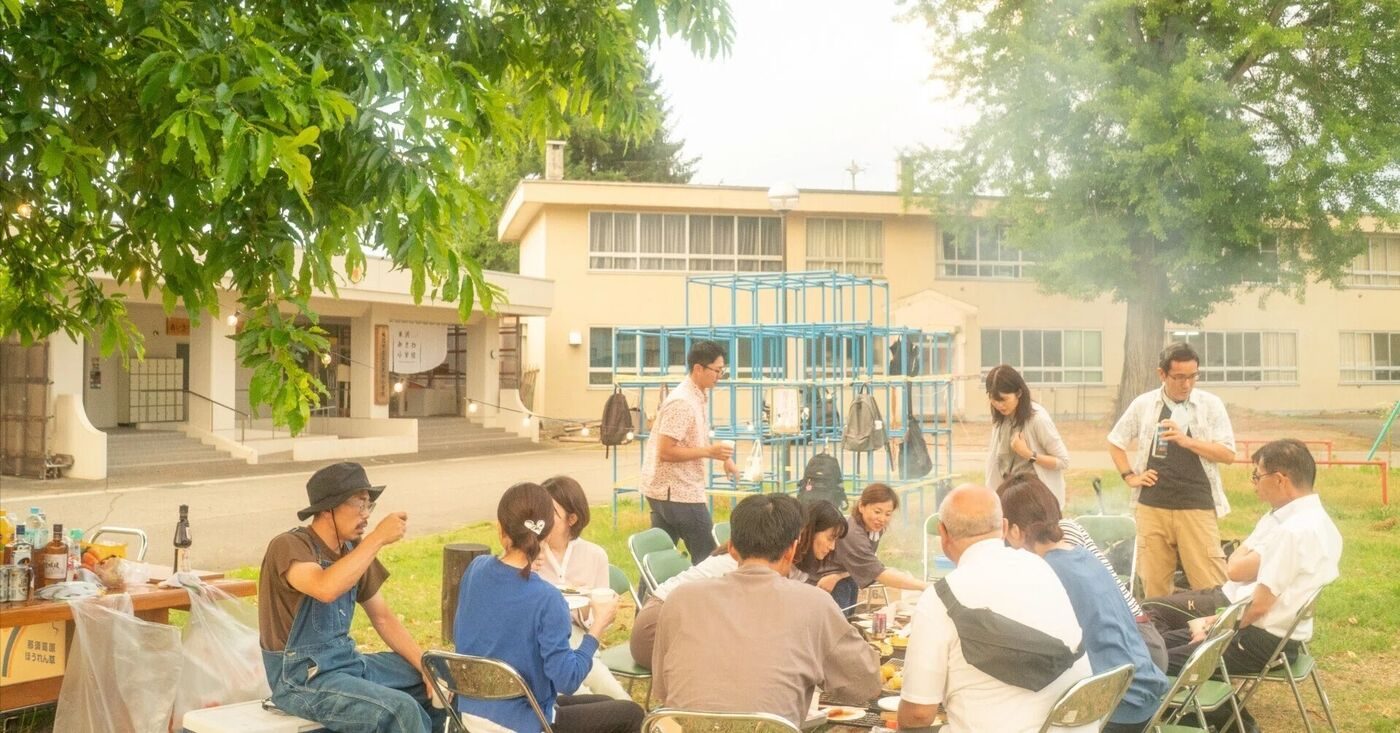
Misawa is not aiming for tourism where you only look. We want tourism where travelers become part of the culture.
Three streams. One village. Now, you.
Read more: An Oil Field Beneath Our Feet: How a Japanese Ryokan Runs on Hot Spring Heat / Seven Experiences in One Onsen Town: Walking Onogawa Onsen