“If You Act, It Can Be Done” Still Asks Us a Question: Uesugi Yozan of Representative Men of Japan, and Yonezawa
- 投稿日:
- 2026年11月7日

What is Representative Men of Japan?
Representative Men of Japan is a book written in English by the Japanese thinker Uchimura Kanzo. It was first published in 1894 and published again in 1908 under the title Representative Men of Japan.
At that time, Japan had only recently opened its doors to the world. Uchimura wanted people around the world to know what kind of spirit the Japanese people had lived by. So he chose five Japanese people and introduced their lives in English: Saigo Takamori (a samurai who led the Meiji Restoration), Uesugi Yozan (the lord of the Yonezawa domain), Ninomiya Sontoku (an agricultural reformer who rebuilt farming villages), Nakae Toju (a Confucian scholar who taught in his village), and Nichiren (a Buddhist monk of the Kamakura period).
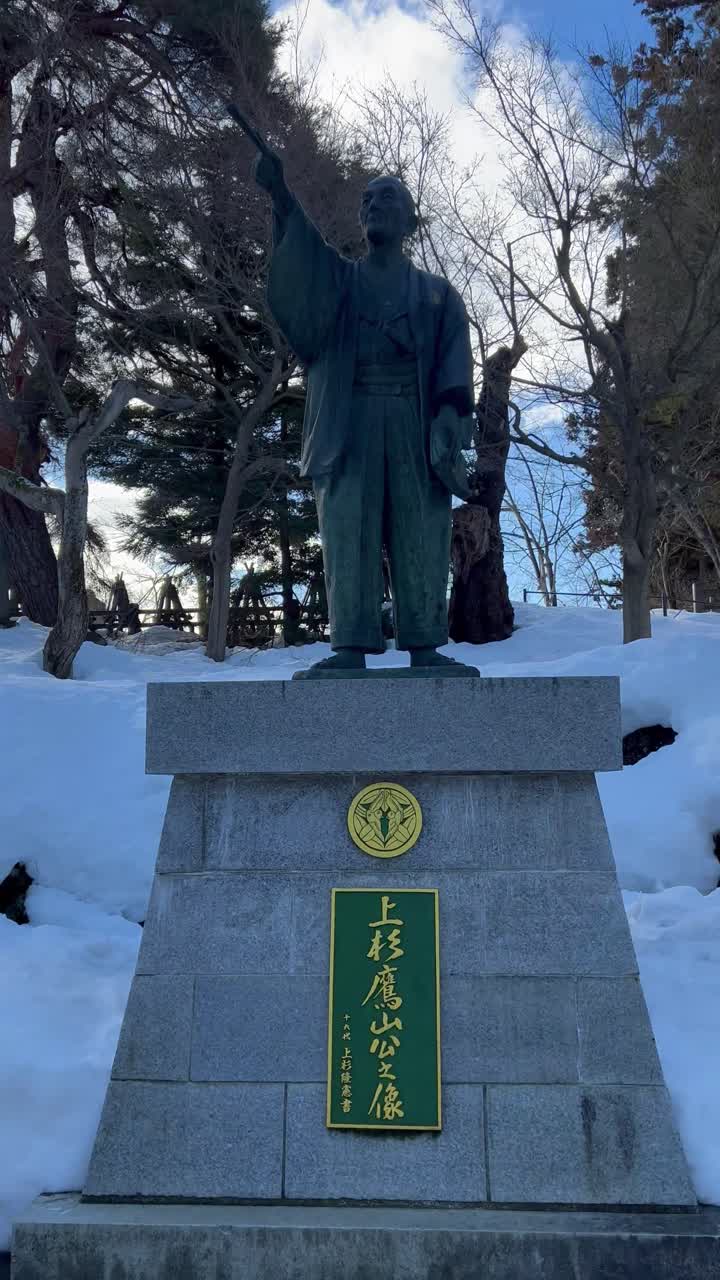
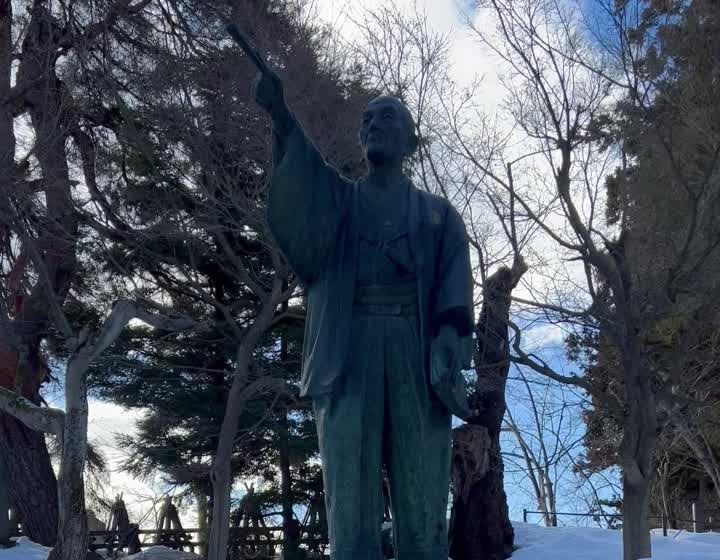
Of these five, Lord Yozan is the only one who was a feudal lord. Uchimura portrayed him as the ideal lord, one who lived for his people.
The book was read far beyond Japan. It is said that when a Japanese reporter asked U.S. President John F. Kennedy which Japanese political leader he most respected, he answered, “Uesugi Yozan.”
In 2014, his daughter Caroline Kennedy, then U.S. Ambassador to Japan, visited Yonezawa. Speaking to the people gathered for the autumn festival, she said that her father admired Lord Yozan’s devotion and his commitment to education. Her father always said that one person can make a difference, she said, and no one showed this more clearly than Lord Yozan. The following year, a monument to her words was built in Yonezawa.
The life of Lord Uesugi Yozan
Uesugi Yozan was the lord of the Yonezawa domain in the Edo period. He was born in 1751 as the second son of the lord of the Takanabe domain, in what is now Miyazaki Prefecture. At 10, he was adopted into the Uesugi family of Yonezawa, and at 17 he became lord of the domain.
At that time, the Yonezawa domain was deep in debt. The Uesugi family had once been great lords with lands worth 1.2 million koku (a measure of rice income). After the Battle of Sekigahara, this was cut to 300,000 koku, and later to 150,000. Even so, the family hardly reduced the number of its retainers. Income had fallen, but spending stayed the same. Debts grew, and it is said that the previous lord even thought of handing the domain back to the shogunate.
The young Lord Yozan began by cutting back his own life. His meals were one soup and one side dish, and he wore cotton instead of silk. Only then did he ask the whole domain to save.
Lord Yozan did not simply save money. He grew new industries. He had lacquer trees, mulberry trees and paper mulberry planted, and spread the work of raising silkworms and weaving silk. This led to today’s Yonezawa-ori silk weaving. He rebuilt the domain school, Kojokan, so that people could study regardless of their rank. He built canals such as the Kuroi Weir to bring water to dry land. To prepare for famine, he stored rice and handed out Katemono, a guide to the wild plants that could be eaten from the mountains and fields. He also set up salt works that made salt from the hot spring source at Onogawa Onsen.
What began in Lord Yozan’s time still supports Yonezawa today as real industries. The silkworm raising and weaving he spread live on as Yonezawa-ori, a silk cloth woven from dyed threads, and it is still a local industry. The carp he had brought in as young fish from Soma in Fukushima became Yonezawa carp, a dish no New Year or celebration is complete without. Ukogi, a shrub he had planted as an edible hedge, still lines gardens around town and is cooked in dishes such as ukogi rice. The Otaka-poppo, a carved wooden hawk from Sasano that he encouraged farmers to make as side work, is still made today as a good-luck charm. Reforms from more than 200 years ago are still alive in the daily life and work of Yonezawa.
When he handed over his position at the age of 35, Lord Yozan gave the next lord three principles called the Denkoku no Ji, “Words on Passing On the Domain.”
One: The domain is passed down from our ancestors to our descendants. It does not belong to the lord.
Two: The people belong to the domain. They do not belong to the lord.
Three: The lord exists for the domain and the people. The domain and the people do not exist for the lord.
More than 200 years ago, a lord himself wrote down that those who lead exist for the people.
Lord Yozan’s life at a glance
| Year | Event |
|---|---|
| 1751 | Born the second son of the Akizuki family, lords of the Takanabe domain |
| 1760 | Adopted into the Uesugi family of the Yonezawa domain |
| 1767 | Becomes lord of Yonezawa at 17 and begins his reforms and savings |
| 1785 | Hands over his position and gives the Denkoku no Ji |
| 1822 | Dies at the age of 72 |
Not a famous saying, but a question
There is a poem that everyone in Yonezawa knows.
Naseba naru, nasaneba naranu nanigoto mo / naranu wa hito no nasanu nari keri
If you act, it can be done. If you do not act, nothing can be done. When something is not done, it is because no one did it. That is what it means.
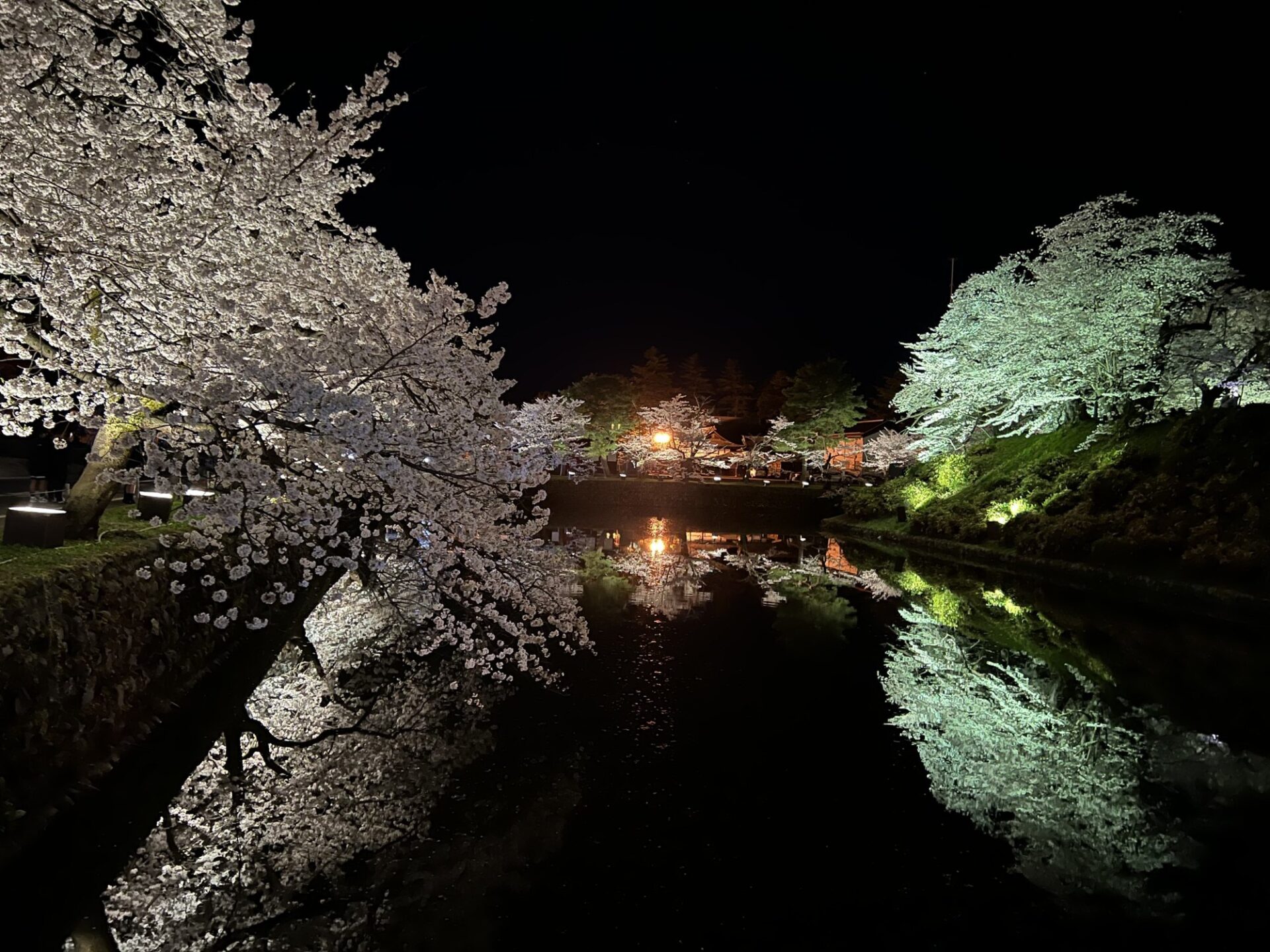
Even today, Lord Yozan’s name is everywhere in Yonezawa. You see it on sweets, on sake and on shop signs. In the gym of every elementary school in Yonezawa, portraits of Lord Yozan and Lord Uesugi Kenshin still hang beside the framed school song.
But for the people of Yonezawa, Lord Yozan is not a famous historical figure used to bring in tourists. And the poem is not just a famous saying to frame and hang on the wall.
Lord Yozan is still a guide for how we act. And he still asks us a question: “So, what will you do?”
Our population keeps shrinking. These are hard times for government and for business alike. There is also a feeling that anything goes, as long as it sells. That is exactly why we want to face Lord Yozan’s question again, honestly. What will we do with our lives, and what will we leave behind? Is it truly something we can hand on to the next generation?
Tofuya Ryokan was once honored to welcome Uesugi Kuninori, the 17th head of the Uesugi family, as a guest. He was a space scientist who worked at JAXA on the Hayabusa asteroid mission. He passed away in 2025.
For the people of Yonezawa, the head of the Uesugi family is still “our lord.” When we welcomed him to our inn, we felt something we had never felt before. It was completely different from meeting a mayor or a governor. It was pure respect, perhaps close to what Japanese people feel for the Emperor.
“Challenge and Creation,” Lord Yozan’s legacy
When Yonezawa City set out to decide what the Yonezawa brand should stand for, it asked its citizens. From junior high school students to seniors, 215 people in 32 groups took part.
Of five proposals, the one rated highest was “Lord Yozan’s DNA: Yonezawa, a town of challenge and creation.” It was rated especially high by young people in their teens to thirties. Their voices showed a strong feeling that the city must change, and pride in the spirit of challenge passed down from Lord Yozan.
And so the concept of the Yonezawa brand became “Challenge and Creation.” Yonezawa City calls Lord Yozan “the spiritual pillar of its citizens.” These are words the people of Yonezawa chose for themselves.
“Yonezawa Quality” is what gives this idea of challenge and creation a real form. In 2019, the city started the Yonezawa Quality Award. It honors outstanding local products and services that have taken challenge and creation to the highest level. Judges visit each place to see the work for themselves, and winners are chosen after a public presentation. It is not a popularity vote. The award is still held every year.
In its very first year, certification number 2019-01 went to Tofuya Ryokan. We were recognized as an inn with barrier-free hot springs that wheelchair users can enjoy, and as an inn where guests can enjoy rakugo, traditional Japanese comic storytelling.
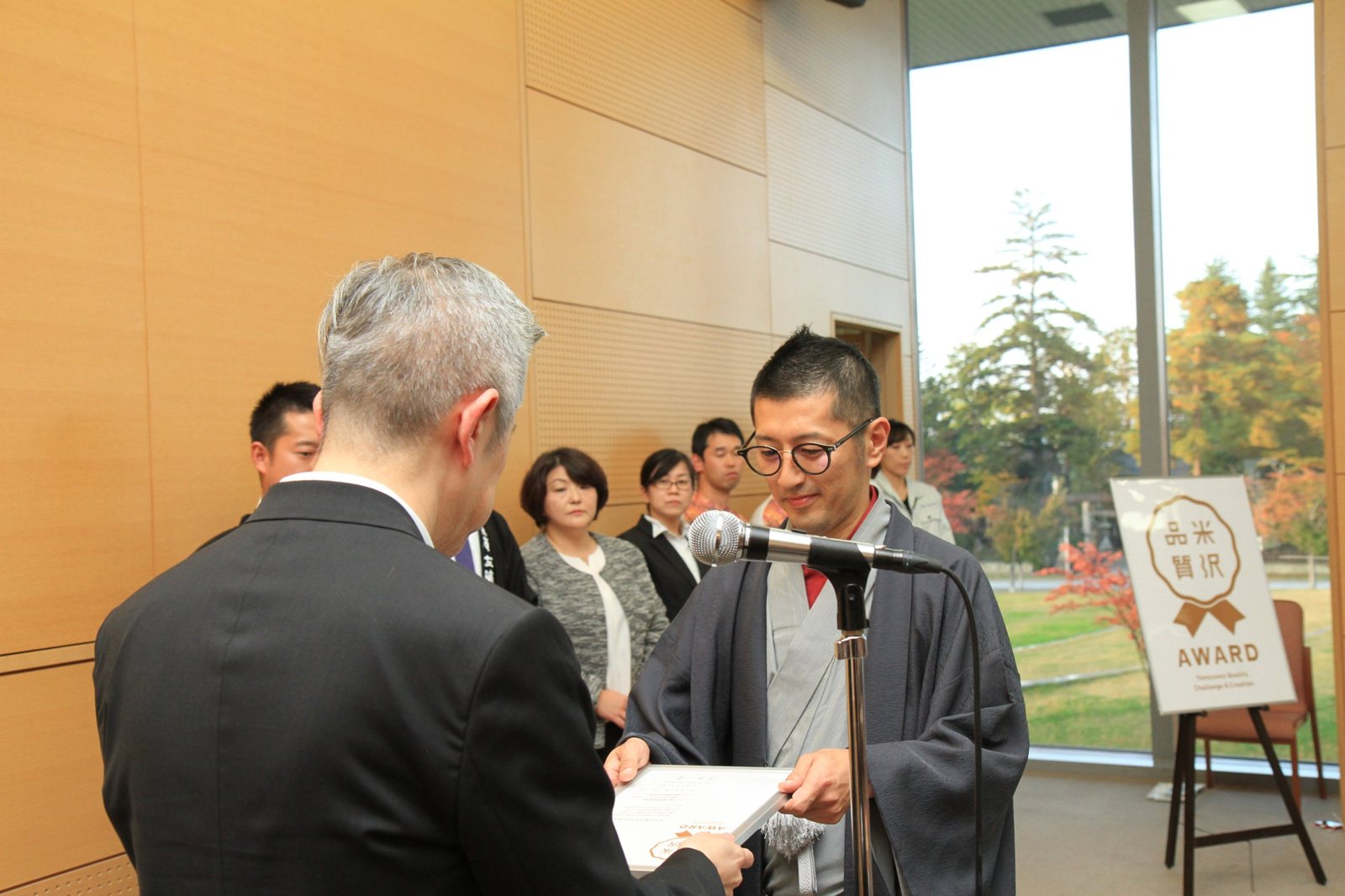
▶ Read more about the awards Tofuya Ryokan has received: From the City, the Prefecture and the Nation: Three Awards for Tofuya Ryokan
More than 200 years have passed since Lord Yozan wrote “If you act, it can be done.” The first to answer his question with Yonezawa Quality was a small hot spring inn.
“Nothing is done unless you act” asks us what we will do.
Today, and in the years to come.
Read more: From the City, the Prefecture and the Nation: Three Awards for Tofuya Ryokan / An Oil Field Beneath Our Feet: How a Japanese Ryokan Runs on Hot Spring Heat